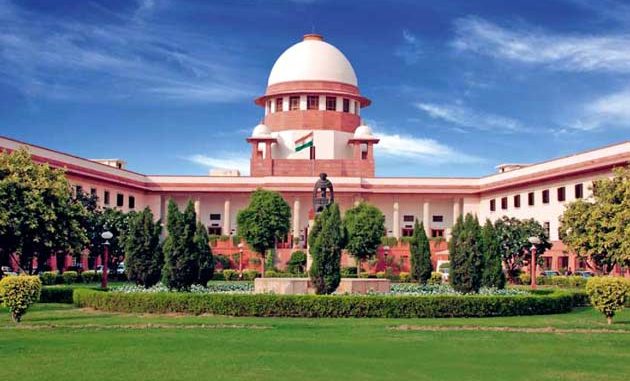
Types of Appeals to the Supreme Court
Appeals to the Supreme Court can be broadly categorized into three main types, each governed by different articles of the Constitution of India:
1. Appeals in Civil Matters (Article 133): A civil appeal to the Supreme Court is filed against any judgment, decree or final order in a civil proceeding of a High Court. For an appeal to be entertained, the High Court must certify that the case involves a “substantial question of law of general importance” and that in the opinion of the High Court, the said question needs to be decided by the Supreme Court. The substantial question of law is one that is not settled by a legal precedent and is not a matter of routine.The procedure for a civil appeal begins with the application for a certificate from the High Court. If the certificate is granted, the aggrieved party can file the appeal in the Supreme Court. If the High Court refuses to grant a certificate, the party can still approach the Supreme Court by filing a Special Leave Petition (SLP), which we will discuss later.
2. Appeals in Criminal Matters (Article 134): Criminal appeals to the Supreme Court are governed by Article 134 of the Constitution. An appeal in a criminal case can be filed under the following circumstances:
○ If the High Court, on appeal, has reversed an order of acquittal of an accused person and sentenced them to death.
○ If the High Court has withdrawn for trial before itself any case from any subordinate court and has convicted the accused person and sentenced them to death.
○ If the High Court certifies that the case is a “fit case for appeal to the Supreme Court.” This is a discretionary power of the High Court, exercised when a significant point of law or procedure is involved.
A statutory right of appeal is also available in certain cases under the Supreme Court (Enlargement of Criminal Appellate Jurisdiction) Act, 1970, which allows an appeal to the Supreme Court against a High Court’s judgment that confirms a conviction and sentence of imprisonment for life or for a term of ten years or more.
3. Appeals by Special Leave Petition (SLP) (Article 136): The Special Leave Petition or SLP, is the most powerful and widely used method of appeal to the Supreme Court. It is the discretionary power vested in the Supreme Court by Article 136 of the Constitution to grant leave to appeal from any judgment, decree, determination, sentence or order in any cause or matter passed or made by any court or tribunal in the territory of India.The “special” nature of this appeal lies in the fact that it is not a right. The Supreme Court may grant special leave to appeal only if it is satisfied that the case involves a question of public or constitutional importance or if there has been a gross miscarriage of justice. An SLP can be filed against a judgment of any court or tribunal, whether civil, criminal or even quasi-judicial bodies. It is a powerful tool to rectify grave errors and ensure that justice is not denied due to technicalities.
The Appeal Procedure
The procedure for filing an appeal to the Supreme Court is meticulous and requires adherence to strict legal and procedural norms. The process is primarily governed by the Supreme Court Rules, 2013.
Step 1: Obtain Leave to Appeal or Certificate As discussed, in most cases, a certificate from the High Court is a prerequisite for a civil or criminal appeal. For a Special Leave Petition, the leave is granted by the Supreme Court itself after a preliminary hearing.
Step 2: Drafting the Appeal Petition The appeal petition is a crucial document. It must be drafted by a qualified Advocate on Record (AOR) in the Supreme Court. The petition must clearly and concisely state the facts of the case, the questions of law involved and the grounds on which the judgment of the lower court is being challenged.
Step 3: Filing the Appeal The appeal petition, along with all the required documents, must be filed in the registry of the Supreme Court. The documents must be properly paginated, indexed and attested. E-filing of appeals is now a common practice, streamlining the process.
Step 4: Preliminary Hearing and Admission Once the appeal is filed, it is listed for a preliminary hearing before a bench of the Supreme Court. The court examines the petition and decides whether it is a fit case for admission. If the court finds merit in the case, it admits the appeal and issues notice to the respondent. If the court finds no merit, it may dismiss the appeal at this stage.
Step 5: Final Hearing and Judgment After the appeal is admitted, the parties file their respective pleadings, including counter-affidavits and rejoinders. The case is then listed for a final hearing. Both sides argue their case and the Supreme Court, after hearing the arguments and examining the records, delivers its judgment.
Time Limits for Filing an Appeal
Timeliness is a critical aspect of filing an appeal. The Limitation Act, 1963, and the Supreme Court Rules prescribe specific time limits. The limitation period is calculated from the date of the judgment or order against which the appeal is being filed.
● For appeals with a certificate from the High Court: The time limit is generally 90 days from the date of the judgment or decree of the High Court.
● For Special Leave Petitions: The time limit is 60 days from the date of the High Court’s judgment in criminal cases and 90 days in civil cases.
It is important to note that the court has the power to condone a delay in filing an appeal, but only if the appellant can provide a “sufficient cause” for the delay. This is a discretionary power of the court and it is not granted as a matter of right.
Essential Documents for Each Type of Appeal
The documents required for an appeal vary depending on the type of matter being appealed. A comprehensive set of documents must accompany the appeal petition, which should be properly paginated and attested.
● For a Civil Appeal:
○ Certified copy of the judgment and order from the High Court.
○ Certified copy of the decree from the High Court.
○ The certificate of fitness for appeal issued by the High Court under Article 134A.
○ A concise statement of facts of the case.
○ Grounds of appeal.
○ List of dates and events.
○ Vakalatnama and memo of appearance signed by the appellant and the Advocate on Record (AOR).
○ Affidavit in support of the petition.
○ Paper book containing copies of all relevant pleadings and evidence from the lower courts.
● For a Criminal Appeal:
○ Certified copy of the judgment and order of the High Court and the trial court if applicable.
○ Certified copy of the final judgment of the trial court.
○ The certificate of fitness for appeal from the High Court (if applicable).
○ A statement of facts and grounds of appeal.
○ Vakalatnama and memo of appearance.
○ An affidavit in support of the appeal.
○ Paper book containing copies of all relevant documents from the lower courts, including charge sheet, FIR and witness statements.
● For a Special Leave Petition (SLP):
○ Certified copy of the judgment or order of the court or tribunal against which the SLP is being filed.
○ An affidavit in support of the petition.
○ A concise statement of facts.
○ The grounds of special leave.
○ Vakalatnama and memo of appearance.
○ A list of dates and events.
○ All relevant documents from the lower courts that are essential for the Supreme Court to consider the case.
○ A concise synopsis and a list of dates to help the court understand the matter quickly.
Why Expert Legal Counsel is Crucial
Appealing to the Supreme Court is a complex legal process that requires specialized knowledge and experience. The drafting of the petition, the identification of the substantial question of law and the presentation of the case before the highest court demand the expertise of an experienced Supreme Court practitioner. An Advocate on Record is a mandatory requirement for filing and conducting a case in the Supreme Court.
Conclusion
The right to appeal to the Supreme Court of India is a vital safeguard of justice in the Indian legal system. Whether through a civil appeal, a criminal appeal or a Special Leave Petition, the Supreme Court stands as the final arbiter of legal disputes, ensuring that justice is not only done but is seen to be done. Understanding the different types of appeals, the strict procedures, the time limits, and the required documentation is the first step towards successfully navigating this crucial stage of the legal process. The journey to the Supreme Court is arduous, but with proper legal guidance and a meritorious case, it remains the ultimate hope for those seeking to rectify a legal wrong and uphold the rule of law.
To connect with us for contract management services for your business, follow any of the below-mentioned ways: